
Best viewed on desktop
This portfolio is designed for desktop and tablet. Open it on a larger screen for the full experience.
Swati Bhat · Senior UX Designer
B2B SaaS
Multi-tenant platform
Marketplace
Systems Design
Digital Marketplace
A B2B marketplace where enterprise buyers purchased software and licenses without sales agents, and service providers launched branded storefronts at scale.
Role: Product Designer
|
Company: Covalense Digital
|
Type: B2B SaaS
|
Timeline: 6 months
|
Year: 2022
|
Status: Shipped · Iridium · SmarTone · Africell

Overview
A white-label digital marketplace where enterprise buyers purchased software, licenses, and digital products without going through sales agents, and service providers launched branded storefronts at scale. I designed the end-to-end buyer experience, discovery, comparison, dual licensing model selection, cart-based purchasing, and a quotation flow for complex enterprise deals and the partner storefront setup flow, including the layout wizard. The platform was deployed across global telecom and enterprise ecosystems including Iridium, SmarTone, and Africell, reducing reliance on sales support and accelerating partner onboarding.
Context and Problem
The marketplace served service providers - telcos, media houses, and enterprise solution providers, selling digital products (SaaS, PaaS, IaaS, licenses) to enterprise buyers at scale. The existing process was fragmented on both sides.
Partners depended on engineering for nearly every storefront change, with technical setup, error-prone catalogue management, and limited operational visibility. Buyers faced slow, agent-led purchasing cycles comparing products through sales teams, waiting for pricing, and negotiating licensing manually, often abandoning evaluation along the way.
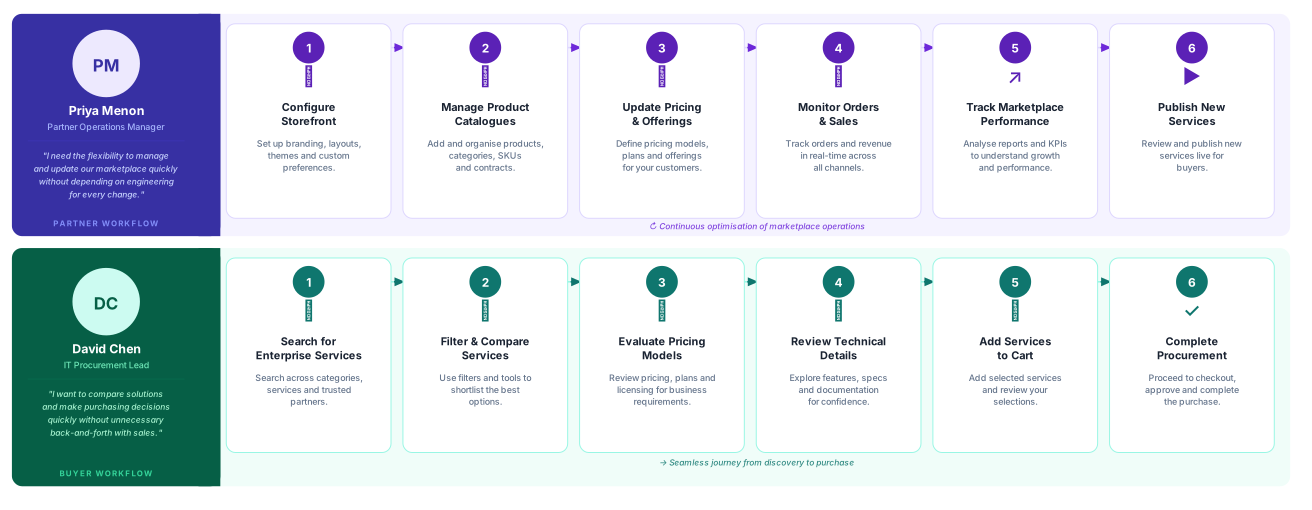
The critical insight came from mapping both journeys side by side: the partner and buyer experiences weren't separate problems, they were structurally connected through the same marketplace architecture. Operational decisions on the partner side directly shaped what buyers saw, compared, and trusted.

Roles and Constraints
My scope: This was my first major project as a junior designer. I owned end-to-end design for the buyer experience discovery, comparison, dual licensing model selection, cart-based purchasing, and the quotation flow and the partner storefront setup flow, including the layout wizard.
Collaboration: I worked closely with the product owner, sales team, and engineering on day-to-day execution. A senior designer provided design reviews, direction, and platform-level guidance throughout.
Key constraints: Multi-tenant white-label architecture at global scale every flow had to support unlimited partner branding without breaking consistency. Two distinct user groups operations managers and procurement leads, with very different mental models. Two coexisting commercial paradigms, perpetual licenses and SaaS subscriptions within the same product experience. Reducing engineering dependency for partner-side operations.

Approach
I mapped both user journeys in parallel rather than sequentially, surfacing the structural connection between the two sides. This shaped a hub-and-spoke architecture where partner configuration changes flowed in real time into buyer-facing storefronts.
Key Decisions
DECISION 01
Designing partner and buyer experiences as one connected system
I structured the platform as a hub-and-spoke architecture where partner configuration directly shaped the buyer-facing storefront in real time, rather than designing two separate experiences that were synced later. When a partner updated a price, changed product status, or restructured their storefront layout, those changes propagated immediately to buyer-facing discovery, comparison, and purchasing flows. The tradeoff was more upfront cross-team alignment and a more complex shared system. The payoff was a platform that scaled across global white-label deployments without engineering as a bottleneck.
DECISION 02
A structured layout system for partner storefronts, not a free-form builder
I tested three setup approaches: single-form, free-form layout builder, and a progressive wizard. The wizard won a 3-step flow (Layout → Theme → Review) with six predefined section types and a dual-mode theme picker. The free-form builder offered flexibility but introduced cognitive overload and risked breaking platform consistency. The wizard gave partners meaningful customization within a controlled system, guaranteeing consistency across hundreds of storefronts.
"The step-by-step storefront setup felt far less overwhelming than configuring everything in a single screen." - Partner usability session
Partners moved from weeks-long, engineering-dependent setup cycles to self-serve publishing in days.
DECISION 03
Two purchase paths for enterprise buyers
I designed parallel buying paths in a single flow: direct cart purchase for self-serve products, and a quotation request flow for items needing custom pricing or sales involvement. Both tracked in the same buyer account. Enterprise buying isn't binary, some products are clean self-serve, others need human involvement for custom pricing or multi-seat deployments. The payoff: buyers chose their own path and stayed in the platform either way.
"Search and filtering became essential once the catalogue started scaling across multiple service categories." - Buyer testing observation
DECISION 04
One product page, two pricing paradigms
I designed a single product page that handled both perpetual licensing (one-time purchase) and SaaS (tiered plans). The pricing section reshaped based on the buyer's selection, while buying actions stayed consistent across both. Commercial information was prioritized over technical depth, with progressive disclosure for specifications.
"Having pricing models and licensing details visible upfront made it much easier to compare solutions without going back and forth with sales." - Buyer testing feedback

Buyers compared licensing models within the same page rather than across separate views, and procurement leads moved through commercial evaluation faster.
Outcome
Partner Outcomes
6× faster storefront configuration workflows
60% operational automation through workflow orchestration
Service launches reduced from weeks to days
Pricing and configuration cycles cut from 6 weeks to under 1 week (Iridium deployment)
Multi-tenant white-label platform deployed across 3 global ecosystems — Iridium, SmarTone, and Africell
Buyer Outcomes
Improved buyer self-service and product comparison workflows
Reduced friction between discovery, evaluation, and purchasing
Simplified enterprise purchasing journeys through structured navigation and pricing clarity
Stakeholder validation. Usability testing with partners and buyers validated the structured setup, catalogue management, and commercial-first product page decisions. Sales teams reported reduced involvement in early-stage cycles and received better-structured quotation requests when human involvement was needed.

Reflection
This project taught me that the strongest leverage in a platform doesn't sit on either side of the experience, it sits at the connection points between them. Designing the partner flow alongside the buyer flow, and designing for the spectrum between self-serve and sales-led rather than forcing a choice, shaped how I approach platform design today: starting with the system, not the screen. What I'd approach differently today: I'd embed accessibility into the design system from the start rather than treating it as a later refinement, and I'd invest more in direct end-buyer research alongside stakeholder interviews to validate decisions like the quotation and licensing flows with even more confidence.
mobile ai case study
Intelligent Service Desk - AI at point of action
→
HCI Case study
AuDHD Tinted Love - Inclusive design framework
→

Designed with love by Swati ✦
© 2026 Swati Bhat
B2B SaaS
Multi-tenant platform
Marketplace
Systems Design
DIGITAL MARKETPLACE
A B2B marketplace where enterprise buyers purchased software and licenses without sales agents, and service providers launched branded storefronts at scale.
Role: Product Designer
|
|
Type: B2B SaaS
|
Timeline: 6 months
|
Year: 2022
|
Status: Shipped · Iridium · SmarTone · Africell
Company: Covalense Digital
Overview
A white-label digital marketplace where enterprise buyers purchased software, licenses, and digital products without going through sales agents, and service providers launched branded storefronts at scale. I designed the end-to-end buyer experience, discovery, comparison, dual licensing model selection, cart-based purchasing, and a quotation flow for complex enterprise deals and the partner storefront setup flow, including the layout wizard. The platform was deployed across global telecom and enterprise ecosystems including Iridium, SmarTone, and Africell, reducing reliance on sales support and accelerating partner onboarding.
Context and Problem
The marketplace served service providers - telcos, media houses, and enterprise solution providers, selling digital products (SaaS, PaaS, IaaS, licenses) to enterprise buyers at scale. The existing process was fragmented on both sides.
Partners depended on engineering for nearly every storefront change, with technical setup, error-prone catalogue management, and limited operational visibility. Buyers faced slow, agent-led purchasing cycles comparing products through sales teams, waiting for pricing, and negotiating licensing manually, often abandoning evaluation along the way.
The critical insight came from mapping both journeys side by side: the partner and buyer experiences weren't separate problems — they were structurally connected through the same marketplace architecture. Operational decisions on the partner side directly shaped what buyers saw, compared, and trusted.
Roles and Constraints
My scope: This was my first major project as a junior designer. I owned end-to-end design for the buyer experience discovery, comparison, dual licensing model selection, cart-based purchasing, and the quotation flow and the partner storefront setup flow, including the layout wizard.
Collaboration: I worked closely with the product owner, sales team, and engineering on day-to-day execution. A senior designer provided design reviews, direction, and platform-level guidance throughout.
Key constraints: Multi-tenant white-label architecture at global scale every flow had to support unlimited partner branding without breaking consistency. Two distinct user groups operations managers and procurement leads, with very different mental models. Two coexisting commercial paradigms, perpetual licenses and SaaS subscriptions within the same product experience. Reducing engineering dependency for partner-side operations.
Approach
I mapped both user journeys in parallel rather than sequentially, surfacing the structural connection between the two sides. This shaped a hub-and-spoke architecture where partner configuration changes flowed in real time into buyer-facing storefronts.
Key Decisions
DECISION 01
Designing partner and buyer experiences as one connected system
I structured the platform as a hub-and-spoke architecture where partner configuration directly shaped the buyer-facing storefront in real time, rather than designing two separate experiences that were synced later. When a partner updated a price, changed product status, or restructured their storefront layout, those changes propagated immediately to buyer-facing discovery, comparison, and purchasing flows. The tradeoff was more upfront cross-team alignment and a more complex shared system. The payoff was a platform that scaled across global white-label deployments without engineering as a bottleneck.
DECISION 02
A structured layout system for partner storefronts, not a free-form builder
I tested three setup approaches: single-form, free-form layout builder, and a progressive wizard. The wizard won a 3-step flow (Layout → Theme → Review) with six predefined section types and a dual-mode theme picker. The free-form builder offered flexibility but introduced cognitive overload and risked breaking platform consistency. The wizard gave partners meaningful customization within a controlled system, guaranteeing consistency across hundreds of storefronts.
"The step-by-step storefront setup felt far less overwhelming than configuring everything in a single screen." - Partner usability session
Partners moved from weeks-long, engineering-dependent setup cycles to self-serve publishing in days.
DECISION 03
Two purchase paths for enterprise buyers
I designed parallel buying paths in a single flow: direct cart purchase for self-serve products, and a quotation request flow for items needing custom pricing or sales involvement. Both tracked in the same buyer account. Enterprise buying isn't binary, some products are clean self-serve, others need human involvement for custom pricing or multi-seat deployments. The payoff: buyers chose their own path and stayed in the platform either way.
"Search and filtering became essential once the catalogue started scaling across multiple service categories." - Buyer testing observation
DECISION 04
One product page, two pricing paradigms
I designed a single product page that handled both perpetual licensing (one-time purchase) and SaaS (tiered plans). The pricing section reshaped based on the buyer's selection, while buying actions stayed consistent across both. Commercial information was prioritized over technical depth, with progressive disclosure for specifications.
"Having pricing models and licensing details visible upfront made it much easier to compare solutions without going back and forth with sales." - Buyer testing feedback
Buyers compared licensing models within the same page rather than across separate views, and procurement leads moved through commercial evaluation faster.
Outcome
Partner Outcomes
6× faster storefront configuration workflows
60% operational automation through workflow orchestration
Service launches reduced from weeks to days
Pricing and configuration cycles cut from 6 weeks to under 1 week (Iridium deployment)
Multi-tenant white-label platform deployed across 3 global ecosystems — Iridium, SmarTone, and Africell
Buyer Outcomes
Improved buyer self-service and product comparison workflows
Reduced friction between discovery, evaluation, and purchasing
Simplified enterprise purchasing journeys through structured navigation and pricing clarity
Stakeholder validation. Usability testing with partners and buyers validated the structured setup, catalogue management, and commercial-first product page decisions. Sales teams reported reduced involvement in early-stage cycles and received better-structured quotation requests when human involvement was needed.
Reflection
This project taught me that the strongest leverage in a platform doesn't sit on either side of the experience, it sits at the connection points between them. Designing the partner flow alongside the buyer flow, and designing for the spectrum between self-serve and sales-led rather than forcing a choice, shaped how I approach platform design today: starting with the system, not the screen. What I'd approach differently today: I'd embed accessibility into the design system from the start rather than treating it as a later refinement, and I'd invest more in direct end-buyer research alongside stakeholder interviews to validate decisions like the quotation and licensing flows with even more confidence.
Designed with love by Swati ✦
© 2026 Swati Bhat